
Describe the material the polymer will encounter
Provide ore campaign, particle distribution, clay or ultrafines indicators, solids, pH, conductivity and relevant process reagents. Identify the preparation-water source separately from recycled process water.
Take representative material from the intended addition point without discarding the finest fraction. Label transport, storage age and any laboratory dilution so the supplier can judge whether the test still represents production.
Request an interpretable factory sample set
Ask for named codes and the reason each molecular or anionic profile is included. A collection of anonymous powders does not establish a useful comparison or a later supply identity.
Keep preparation, active or commercial dose basis, water and solution age documented. Compare a dose band with the current product and repeat promising conditions rather than selecting one unusually fast settling jar.
Make the thickener endpoint explicit
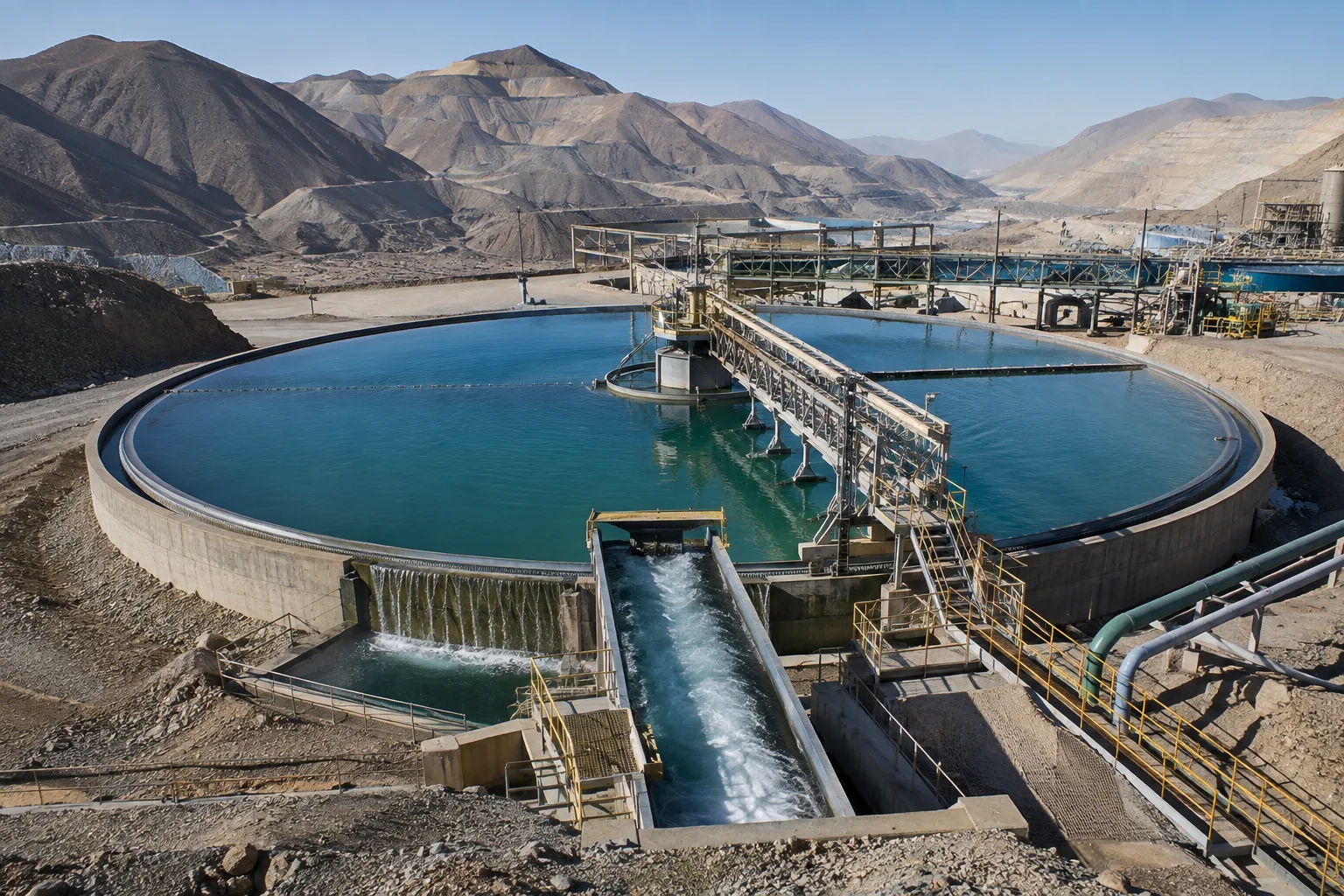
Record overflow quality, settling, final bed and underflow handling. For plant approval, add throughput, feedwell conditions, bed state and the relevant equipment observations under the plant's approved procedure.
Water recovery alone is not a complete result when underflow cannot be pumped or downstream filtration worsens. Include the next process requirement and keep any equipment change separate from the polymer comparison.
Connect the sample to the offer
Ask whether the sample represents the proposed production code and commercial form. Request its TDS, SDS, release specification and packaging proposal; do not infer guaranteed molecular values or supply capacity from a mining label.
The sample-to-plant investigation helps resolve a good bench result that fails in production. Preserve preparation and feed evidence before replacing the code or accepting a higher consumption claim.
A tailings enquiry handover
Keep the approved code beside feed envelope, test method, useful dose band, overflow target and acceptable underflow condition. Mark untested ore campaigns as pending rather than extending the approval by assumption.
Send the trial quantity, expected demand, destination and operating record through the China APAM factory enquiry. Compare the eventual price at the accepted result. A grade substitution, different preparation method or major recycle-water change should reopen the relevant part of qualification.
Tailings approval evidence
| Checkpoint | Evidence to retain | Decision boundary |
|---|---|---|
| Feed range | Retain ore or mineral source, fines description, solids and sample handling for each accepted trial. | An untested ore campaign remains outside the evidence; a generic mining label does not fill that gap. |
| Water condition | Keep preparation water and recycle-water analyses separate, with upstream reagents and any dilution recorded. | A fresh-water laboratory result does not establish the same response in an accumulated recycle circuit. |
| Underflow | Retain compaction and handling observations alongside overflow quality at the accepted commercial dose. | Fast settling alone does not authorize a bulk order if pumping or filtration fails the next process constraint. |