
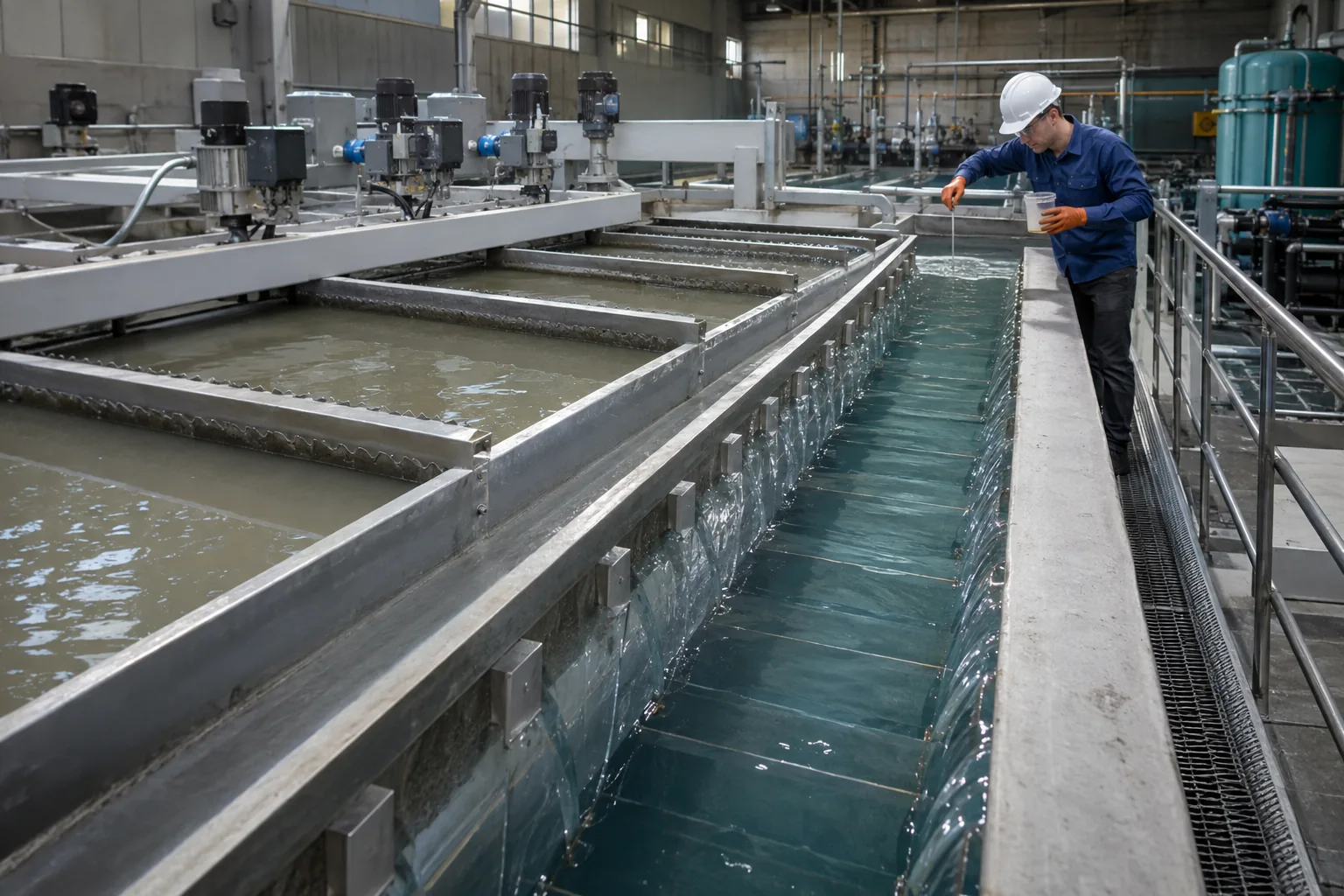
Confirm that both trials used comparable feed
Record where and when the laboratory sample was collected. Stored, diluted or selectively collected feed may not represent the operating plant. Changes in sludge blend, mineral fines or upstream chemicals can produce a different response even when the same polymer is used.
Repeat a baseline comparison with fresh representative feed where practical. If the current product also performs differently, investigate the feed and test conditions before attributing the discrepancy to the new sample.
Check available polymer, not just feeder settings
Compare actual preparation water, concentration, mixing, maturation and transfer conditions. A feed pump setting does not prove that a fully prepared solution reached the injection point. Inspect for inconsistent stock, incomplete dispersion and interruptions in delivery.
Reconcile the dose units. Product mass, active-polymer mass and liquid volume are different quantities. Calculate using documented active fraction and density when applicable, then verify the physical delivery rate rather than trusting a nominal setting.
Follow the floc through the equipment
A laboratory vessel cannot reproduce every transfer pump, pipe and separator. Inspect injection location, available mixing, residence time and shear. If floc forms initially but deteriorates before separation, investigate the route instead of automatically increasing polymer concentration.
Record separator settings and load during the comparison. For dewatering, evaluate liquid quality, capture and cake condition together. For settling, include overflow quality and underflow behavior. Keep one process change at a time where safe and operationally feasible.
Decide whether to adjust or stop
Define a bounded retest: the variable to change, the measurements to observe and the unacceptable outcome that stops the trial. Avoid repeated unrecorded adjustments that make the result impossible to interpret. Escalate preparation or safety concerns to the responsible plant team.
Return the findings with the sample code to technical sales. The qualification plan and application endpoints help determine whether the candidate needs a different preparation method, another molecular profile or rejection for this duty.
Related purchase decisions
- Anionic Polyacrylamide from China: Tailings Factory RFQ — Request anionic PAM factory samples for tailings using mineral feed, recycle water, thickener limits, trial evidence and a named commercial grade.
- Cationic Polyacrylamide Factory Supply for Sludge Centrifuges — Qualify a China CPAM supply offer through sludge identity, centrate and cake acceptance, preparation capacity, commercial consumption and shipment controls.
- Nonionic Polyacrylamide Factory Quotes: Qualify Mineral Samples — Compare nonionic PAM factory offers on actual mineral feed, matched ionic alternatives, preparation conditions and accepted separation rather than a neutrality claim.
- Polyacrylamide Factory MOQ: Plan a Useful Trial Order — Discuss PAM sample and trial quantities against plant consumption, observation time, storage and purchase approval instead of assuming a universal MOQ.
- From PAM Factory Sample to First Order: Preserve Grade Identity — Turn an approved polymer trial into a first-shipment specification with code, documents, preparation, packaging and a repeatable receiving comparison.