
Qualify the application before the purchase
The label nonionic does not establish universal suitability for acidic water, minerals or any other category. Ask for the proposed grade definition and application rationale. Screen against alternatives when the dominant interaction is uncertain.
Specify the proposed product code and supplied form. Request the technical sheet and handling instructions for that code, and confirm whether the sample is representative of the material proposed for commercial supply. A family name alone cannot define an acceptable shipment.
Measure the result that matters
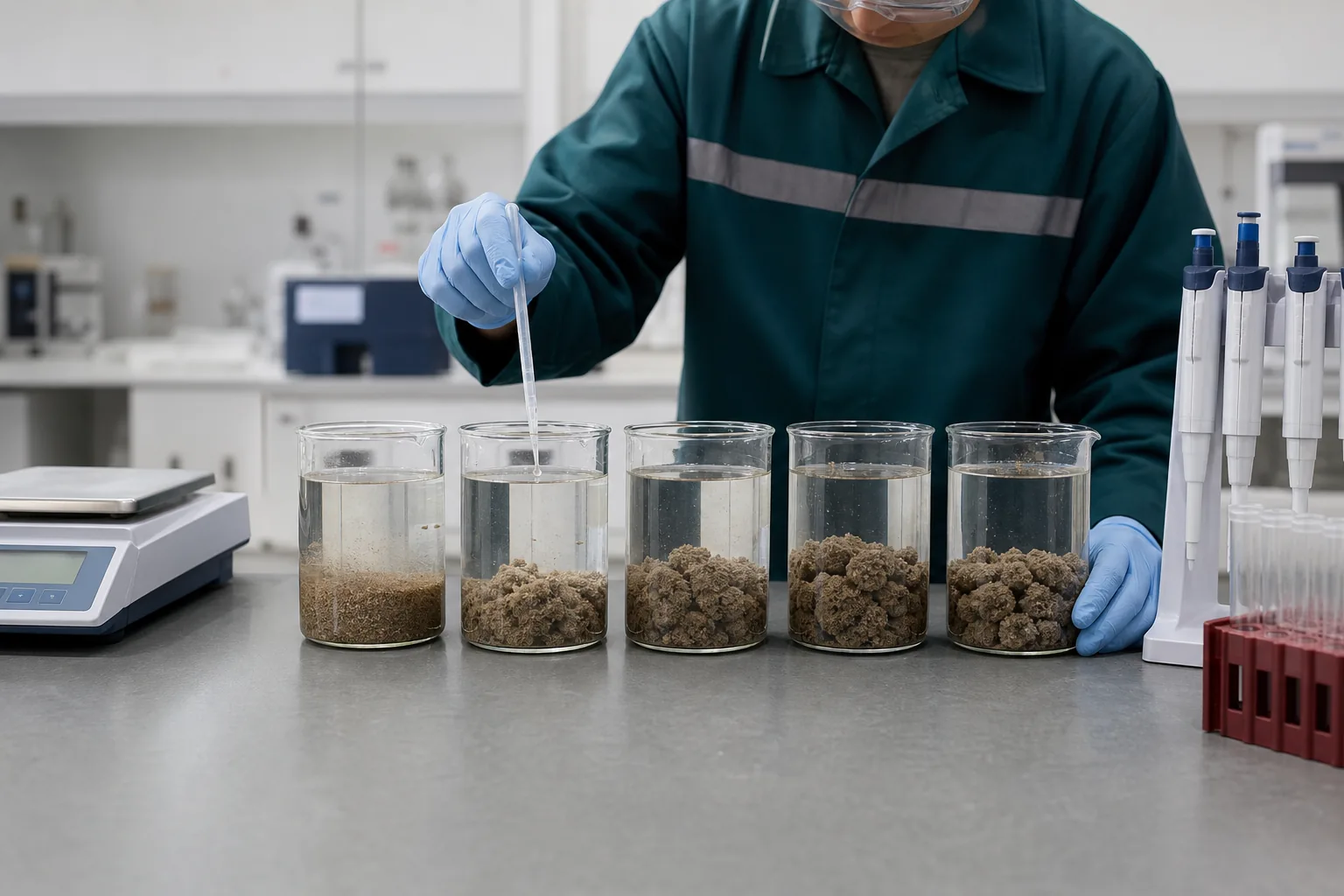
Keep water quality and preparation consistent while comparing the candidates. Use separation endpoints rather than solution thickness or floc size as the approval basis. If the response is weak, investigate sample representativeness and process chemistry before interpreting the result as a supplier-quality problem.
Useful acceptance endpoints include: separation response relative to matched anionic and cationic candidates. Agree how each endpoint is measured and retain the untreated or current-product comparison. The application screening routes connect the product enquiry to the treatment duty.
Define what nonionic means for the proposed grade
Request the supplier definition and relevant specification for the candidate. Commercial descriptions do not establish identical molecular architecture or identical preparation behavior. Ask why this grade merits screening on the identified suspension and what an alternative ionic candidate would test.
Use the untreated feed or an established treatment as a control. Where the selection is uncertain, compare a small justified set of families under matched conditions. A nonionic candidate should earn approval through the required separation result, not through a general claim of chemical neutrality.
Separate preparation faults from weak performance
Observe dispersion and the consistency of the prepared solution before interpreting a poor separation result. Record water condition, concentration, mixing and elapsed preparation time using the supplied instructions. Unprepared particles or inconsistent dosing can invalidate an otherwise useful comparison.
Do not use solution thickness as a proxy for application value. Evaluate the actual endpoint: liquid quality, capture, drainage or handling. If the candidate produces little improvement, discuss the full feed and trial record before changing grade or assuming that a higher dose must work.
Purchase against the approved screening record
Define the proposed code, supplied form and analytical release conditions with Xinqi. Request sample identification and the documents that will accompany commercial supply. If special process compatibility is important, put the requirement into the written enquiry for explicit confirmation.
Keep the approved sample result with the process-water and feed description. At receipt, verify packaging, lot identity and the relevant COA before use. A changed feed, another preparation method or a substituted code should trigger a deliberate review rather than an undocumented continuation.
Connect the sample approval record with grade documentation and delivery requirements before ordering.
Order-specific purchasing records
- Nonionic Polyacrylamide Factory Quotes: Qualify Mineral Samples — Compare nonionic PAM factory offers on actual mineral feed, matched ionic alternatives, preparation conditions and accepted separation rather than a neutrality claim.