
Agree the audit question
Identify the contracting entity, proposed code, form and intended application. Ask which manufacturing and release activities belong to that entity and which are arranged elsewhere.
Define the scope with the assessor and supplier before the visit or remote review. A general tour, certificate or photograph is not proof that every process, product or future shipment is covered.
Follow an identified product record
Choose a relevant code and ask how it is linked to sample preparation, applicable specification, production or supply records and release documentation. Review how lot identity is preserved through packaging and dispatch.
Keep access and confidentiality arrangements explicit. The evidence should be sufficient for the agreed purchasing decision without demanding unrelated proprietary manufacturing information.
Review the control of methods and changes
Ask which tests release the lot, how methods and specifications are revised, and how out-of-limit or uncertain material is handled. Distinguish a documented procedure from evidence that it was applied to the relevant grade.
Confirm how product-code, manufacturing arrangement, formulation-related specification or packaging changes reach the buyer. A matching product name is not a complete substitution control.
Keep the application decision separate
An acceptable quality-system review does not establish that the polymer works on the buyer's feed. Retain the application qualification as a separate approval stage.
Use the factory identity checklist for unresolved entity questions. Certificates, site observations and plant-trial results should each support the question they actually answer.
An audit exception register
Record finding, evidence reviewed, remaining question, owner and required response. Mark a closed item only when the agreed evidence was obtained; do not use a low quotation to erase an unresolved issue.
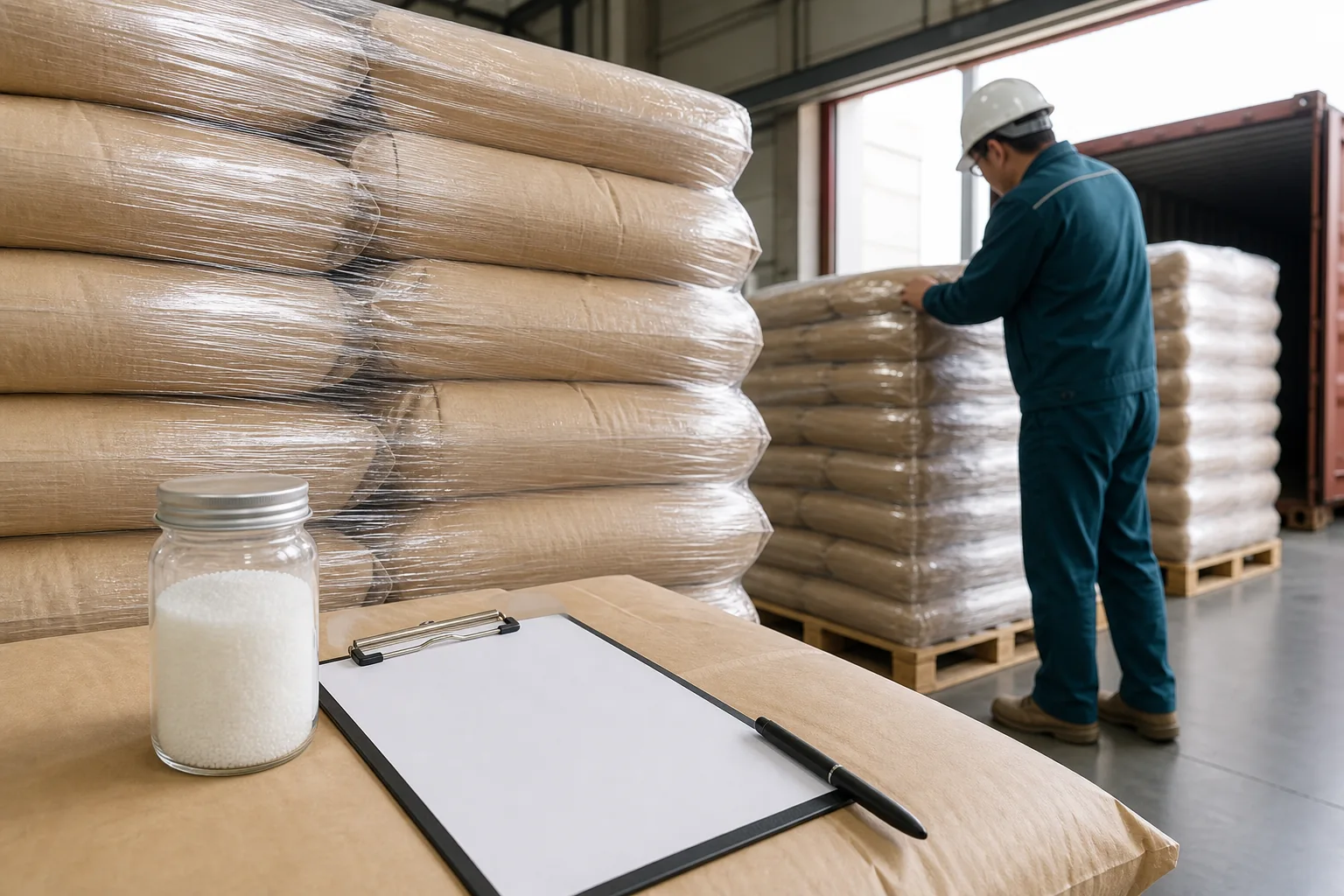
Send the proposed code and review scope through the factory evidence enquiry. Xinqi's actual capability, certification or audit status must be established from current relevant records. Illustrative scenes in the purchasing pages are not factory audit photographs or independent verification.
Audit evidence register
| Checkpoint | Evidence to retain | Decision boundary |
|---|---|---|
| Business role | Identify the contracting, manufacturing and supply entities and how the proposed grade moves through those responsibilities. | A tour or company brochure does not independently establish ownership of every represented production activity. |
| Grade trail | Follow one relevant code through its specification, sample identity, lot release and package records within the agreed scope. | A general procedure is not evidence that the relevant product or shipment followed that procedure. |
| Findings | Retain observed evidence, access limitations, open questions and the responsible closure decision. | A favorable overall impression cannot silently close an unresolved material or traceability exception. |